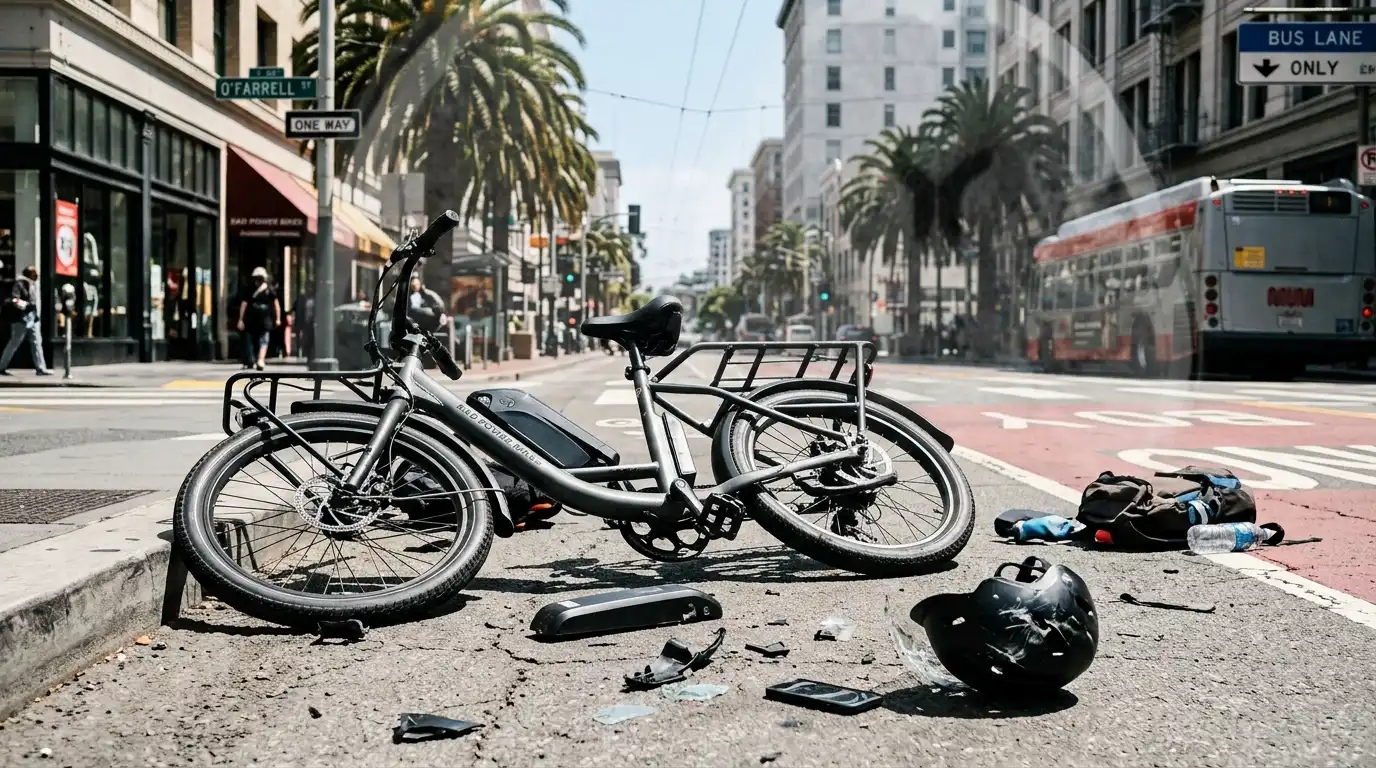
In recent years, the explosion of electric bicycle (e-bike) usage across California’s urban centers and coastal communities has brought an alarming, corresponding surge in emergency room trauma admissions. More concerning for neurologists and personal injury attorneys alike is the sheer severity of these collisions. When an e-bike rider is thrown from their vehicle or struck by a distracted motorist, the resulting head trauma is rarely a simple, easily resolved concussion. Due to the heavier weight and faster acceleration of these vehicles, the impact frequently mirrors the devastating physics of a high-speed motorcycle accident. This leads to catastrophic Traumatic Brain Injuries (TBIs), subdural hematomas, and diffuse axonal injuries that alter the course of a victim’s life forever.
Recognizing this growing public health and safety crisis, the California legislature enacted a sweeping package of micro-mobility and e-bike regulations that officially went into effect on January 1, 2026. For victims and their families dealing with the profound physical, emotional, and financial aftermath of a brain injury, understanding these new statutes is absolutely critical. These laws do more than just set rules for the road; they fundamentally alter the landscape of civil liability, product defect claims, and comparative fault in California TBI litigation.
The Physics of E-Bike Brain Trauma
 To understand why the 2026 legislative updates are so vital to personal injury law, one must first recognize why e-bikes produce such severe neurological damage. A traditional analog bicycle generally travels at speeds of 10 to 12 miles per hour. In contrast, Class 3 e-bikes provide motor assistance up to 28 miles per hour. When a collision occurs at speeds approaching 30 mph, the kinetic energy transferred to the human skull increases exponentially.
Furthermore, e-bikes can weigh up to 80 pounds due to heavy lithium-ion battery packs and reinforced frames. This increased mass makes the bikes significantly harder to maneuver and stop abruptly in emergency situations. When a rider goes over the handlebars, the angular momentum violently rotates the brain within the skull. This rotational force shears the delicate connective tissues and nerve fibers of the brain—a condition known as diffuse axonal injury—which can cause permanent cognitive deficits, memory loss, and severe motor impairment even if the skull itself is not fractured.
AB 1774: Cracking Down on Illegal Speed Modifications
One of the most consequential new laws for brain injury attorneys is Assembly Bill (AB) 1774, which makes it explicitly illegal to sell, install, or use aftermarket devices or software hacks designed to override an e-bike’s factory speed or power limits. Previously, an alarming number of riders were “de-restricting” Class 1 and Class 2 e-bikes, allowing vehicles designed for 20 mph to hit speeds in excess of 35 mph.
In the context of TBI litigation, AB 1774 creates a powerful new avenue for determining liability. If a rider suffers a severe brain injury while riding an e-bike that a local shop illegally modified, that retailer can now be held strictly liable for the injuries caused by the illegal alteration. The statute establishes that a speed-hacked Class 1 e-bike is no longer legally classified as a bicycle; it becomes an unregistered, illegal motor vehicle.
Conversely, if a victim is struck by a negligent driver while riding an illegally modified e-bike, insurance defense teams will immediately use AB 1774 to argue comparative fault. They will attempt to claim the victim’s illegal speed contributed to the crash, seeking to diminish the value of the TBI claim. Experienced brain injury attorneys must rely on advanced accident reconstruction experts to prove that the victim’s brain trauma was caused by the driver’s negligence, irrespective of the e-bike’s underlying software modifications.
SB 1271: Battery Safety and Product Defect Claims
Another major pillar of the 2026 safety overhaul is Senate Bill (SB) 1271. This law mandates that all e-bikes, batteries, and charging systems sold in California must be tested and certified by an accredited laboratory, meeting strict safety standards such as UL 2849. Uncertified e-bikes and batteries are now completely banned from retail sale and distribution within the state.
While SB 1271 is primarily known for combating the epidemic of lithium-ion battery fires, it plays a distinct role in neurological injury claims. When a cheap, uncertified e-bike battery violently combusts or suddenly fails while the bike is in motion, the rider is often thrown to the pavement in a desperate attempt to escape the flames. We have seen TBI cases resulting directly from the sudden, catastrophic mechanical failure of these illegal powertrains.
Under the new rules of SB 1271, tracking product liability becomes much more straightforward for plaintiff attorneys. Because manufacturers and retailers must now maintain meticulous certification records and affix permanent verification labels to their products, proving that a company negligently sold a dangerous, non-compliant battery that led to a victim’s brain injury is a far more streamlined legal process. The law effectively raises the standard of care for manufacturers, making it harder for them to hide behind complex international supply chains.
AB 544 and the Comparative Negligence Trap
California operates under a system of “pure comparative negligence.” This means that if an accident victim is found to be partially at fault for their own injuries, their financial compensation is reduced by their percentage of fault. Insurance companies aggressively leverage California vehicle codes to assign blame to injured cyclists.
This brings us to Assembly Bill (AB) 544, a seemingly minor 2026 equipment update that carries massive implications for TBI claims. Previously, e-bikes were only required to have a rear red reflector or light when riding in darkness. Starting in 2026, AB 544 requires all e-bikes to be equipped with a rear red reflector or a solid/flashing red light visible from 500 feet at all times, day and night.
If a rider suffers a traumatic brain injury after being rear-ended by a distracted driver during broad daylight, you can guarantee the driver’s insurance company will immediately investigate the e-bike’s equipment. If the victim’s bike lacked the daytime rear reflector mandated by AB 544, the defense will argue that the victim’s own non-compliance was a proximate cause of the crash. Overcoming this defense tactic requires skilled legal advocacy to demonstrate that the driver’s inattention—such as texting behind the wheel—was the overwhelming cause of the collision, and a simple plastic reflector would not have prevented the catastrophic neurological trauma.
The Critical Role of Age and Helmet Mandates
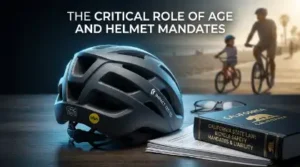 Finally, California continues to enforce strict helmet and age requirements that frequently intersect with TBI litigation. Riders of Class 3 e-bikes must be at least 16 years old, and a newly reinforced provision (AB 965) explicitly prohibits selling Class 3 vehicles to minors. Furthermore, all riders under the age of 18 must wear a properly fitted, CPSC-certified helmet, regardless of the e-bike’s class, while all Class 3 riders must wear a helmet regardless of age.
When a minor suffers a traumatic brain injury on an illegally purchased Class 3 e-bike, or while riding without a helmet, insurance companies will attempt to deny the claim entirely. However, the law holds that children cannot be held to the same standard of comparative negligence as adults. A premier brain injury law firm knows how to dismantle these defenses, often by pursuing claims against the negligent retailers who illegally sold the high-speed e-bike to a minor, or by demonstrating that the sheer force of the impact caused the TBI regardless of helmet usage.
Securing Your Future After an E-Bike Brain Injury
The intersection of advanced neurological trauma and brand-new 2026 micro-mobility legislation makes e-bike TBI claims some of the most complex personal injury cases in California. A traumatic brain injury does not just result in a stack of immediate medical bills; it requires a lifetime of specialized cognitive therapy, lost future earning capacity, and immense pain and suffering.
If you or a loved one has suffered a brain injury in an e-bike collision, you cannot rely on a general practice attorney who is unfamiliar with the nuances of SB 1271, AB 1774, and AB 544. You need a dedicated legal team that understands both the complex medical science of brain trauma and the rapidly evolving California Vehicle Code.